Introduction: More Than Just a Flame
Lighting a cigar isn’t just about setting tobacco on fire. It’s a ritual, a moment that sets the tone for the entire smoking experience. Do it right, and you unlock the cigar’s true character — the aroma, the taste, and the smooth draw. Do it wrong, and you risk uneven burns, bitterness, or a disappointing start.
In this guide, we’ll walk you through the art of lighting a cigar properly — from choosing the right flame to the exact steps that ensure a perfect start.
Why Lighting Matters
Unlike a cigarette, a cigar is made of carefully rolled, aged tobacco leaves. The way you light it determines how evenly the cigar burns, how the flavors develop, and whether you enjoy it the way the maker intended.
- Even burn = balanced flavor. A crooked burn can ruin taste and waste half the cigar.
- First impression counts. The first few puffs set the stage for the entire session.
- Respect for craftsmanship. A cigar often represents years of cultivation and rolling. Proper lighting honors that effort.
Tools You’ll Need
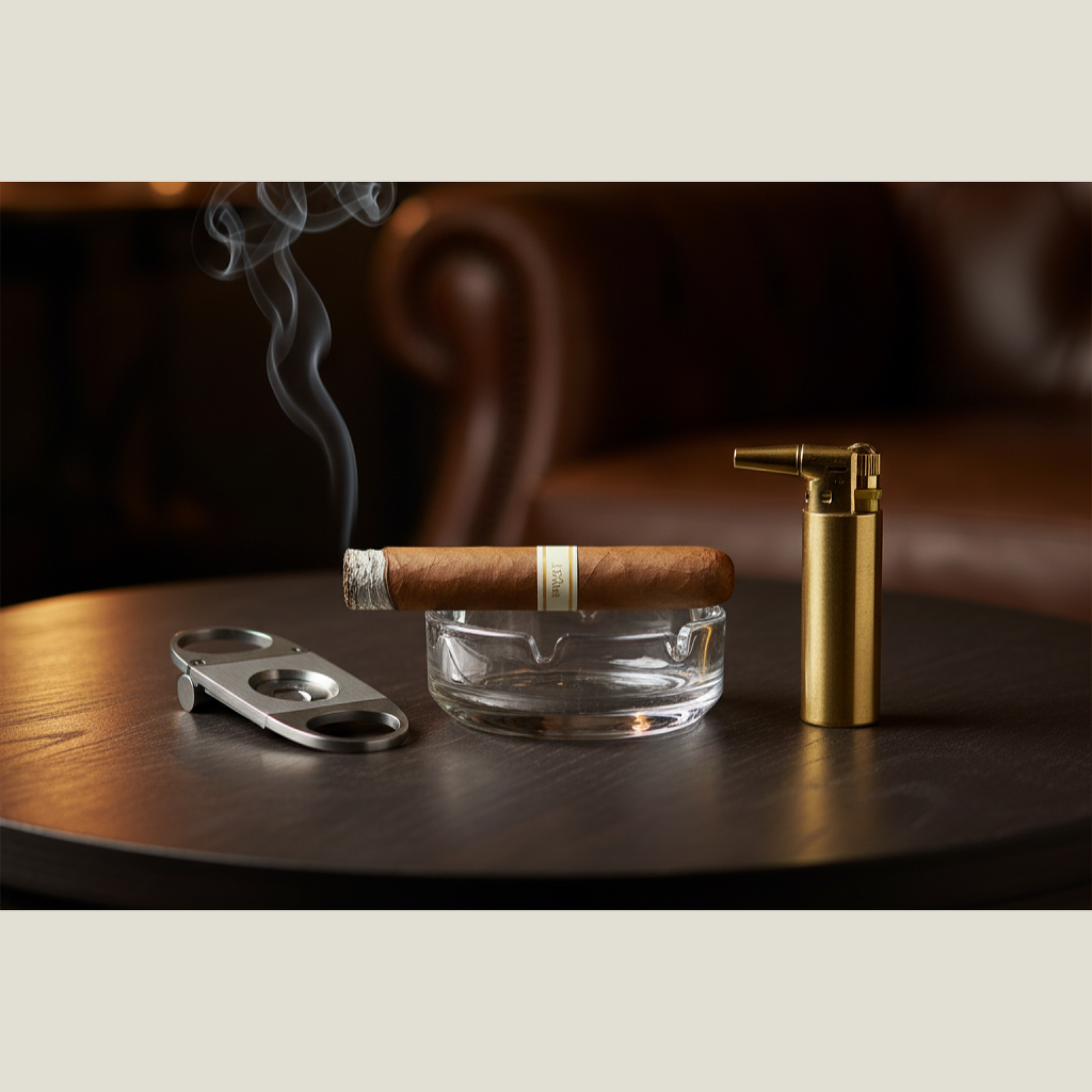
Not all flames are created equal. Choosing the right tool is essential:
- Butane Torch Lighter
- Preferred by many aficionados.
- Produces a clean, odorless flame that won’t affect cigar flavor.
- Strong enough to light outdoors without struggle.
- Long Wooden Matches (Sulfur-Free)
- A traditional and classy choice.
- Make sure to let the sulfur burn off before bringing the match to the cigar.
- Cedar Spills
- Thin strips of cedar (often from cigar boxes).
- Enhance aroma with a subtle cedar note.
- A favorite among purists for ceremonial flair.
❌ Avoid candles, petrol lighters, or regular matches — they can leave unwanted chemical or waxy tastes on the cigar.
Step-by-Step: The Proper Lighting Technique
Here’s the organized, easy-to-follow process:
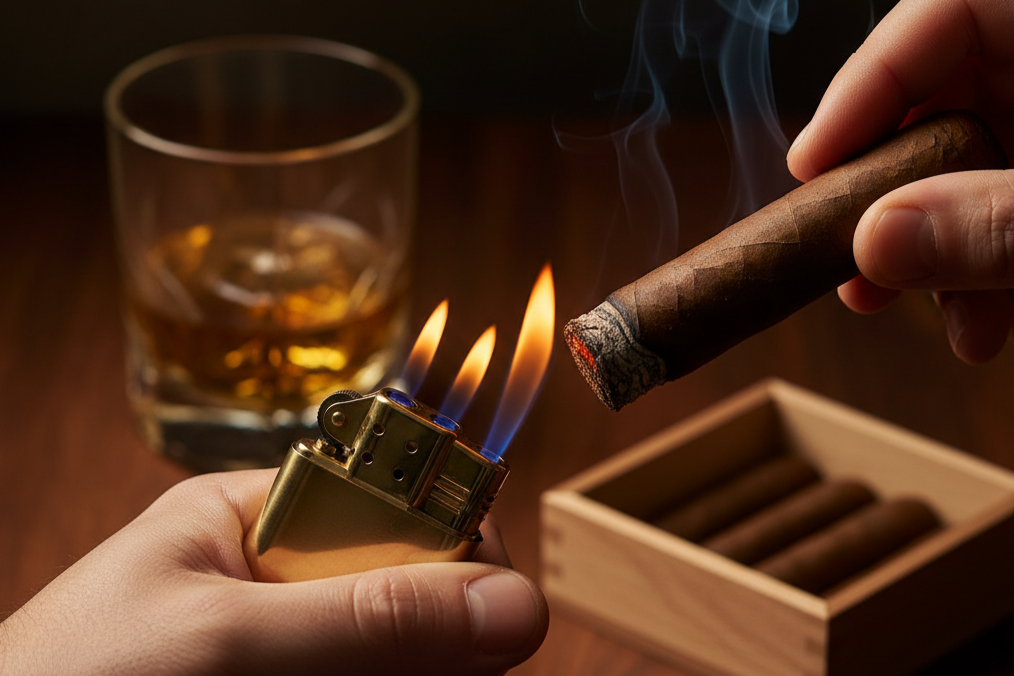
Step 1: Toast the Foot
- Hold the cigar at a 45-degree angle above the flame — without touching it directly.
- Slowly rotate the cigar so the foot (the open end) gets evenly toasted.
- Look for the edges to turn a glowing, dark brown. This preps the cigar for an even ignition.
Step 2: Bring It to Your Lips
- Place the cigar between your lips gently.
- Keep the flame just under the cigar, not touching it.
- Slowly draw air in while rotating the cigar, letting the flame catch naturally.
Step 3: Check for Even Burn
- After a few gentle puffs, remove the cigar and look at the lit end.
- If part of the foot isn’t glowing, touch it up with the flame until it’s evenly lit.
- Take your time — rushing here can cause uneven burns later.
Mistakes to Avoid
Many beginners make small errors that spoil the experience. Watch out for these:
- Don’t rush. Forcing a quick light leads to uneven burning.
- Don’t shove the cigar directly into the flame. That overheats the tobacco and makes it harsh.
- Don’t inhale like a cigarette. Cigars are for savoring, not lung-smoking.
- Don’t use the wrong flame source. Petrol lighters, scented candles, or sulfur-heavy matches can ruin flavor instantly.
Pro Tips for a Perfect Light
- Patience pays off. A proper light takes about a minute — worth every second.
- Use a circular motion. Rotating ensures the entire foot glows evenly.
- Relight the right way. If your cigar goes out, tap the ash gently, then relight using the same slow method.
- Create the ritual. Lighting a cigar is part of the enjoyment. Pour a drink, slow down, and make it a moment.
Conclusion: Setting the Tone for the Experience
Lighting a cigar properly is part science, part art, and part tradition. Once you master the ritual — with the right tools, patience, and respect for the craft — every cigar session becomes smoother, richer, and more enjoyable.
At Casa Cigar, we believe lighting a cigar is more than a step; it’s the opening act of a timeless performance. Take your time, do it right, and let every cigar tell its story from the very first spark.